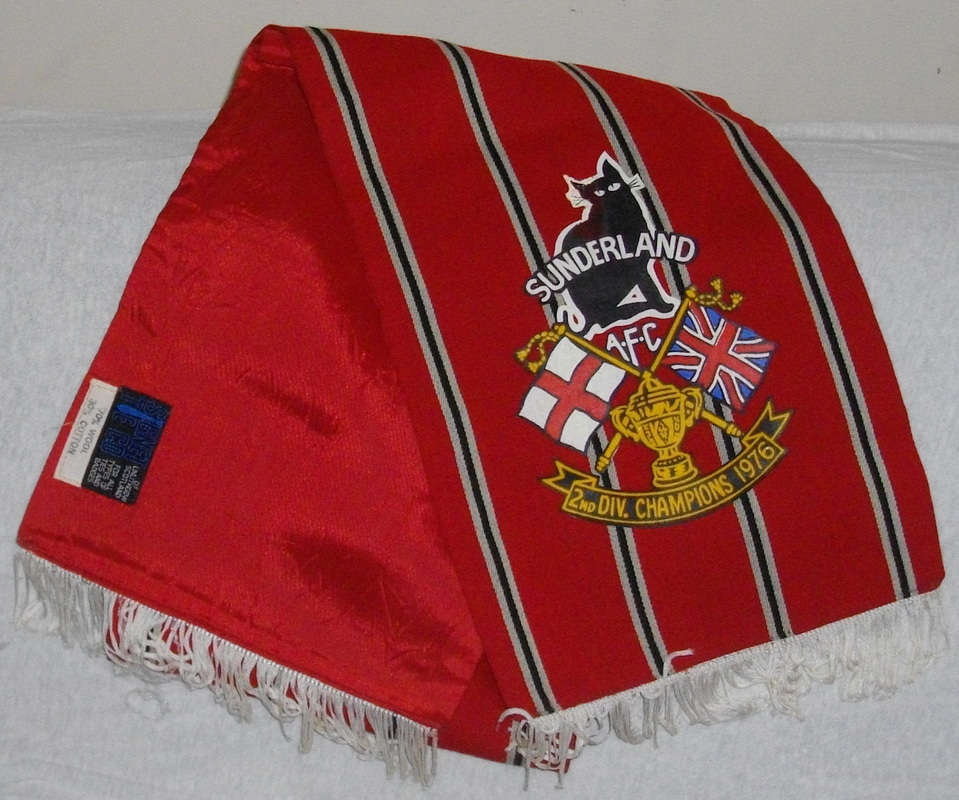
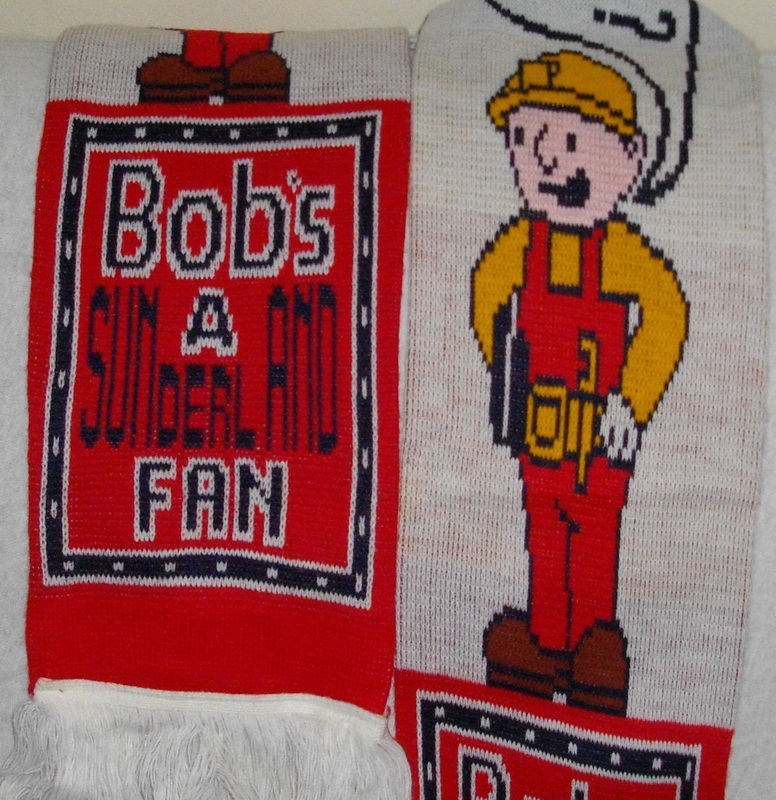
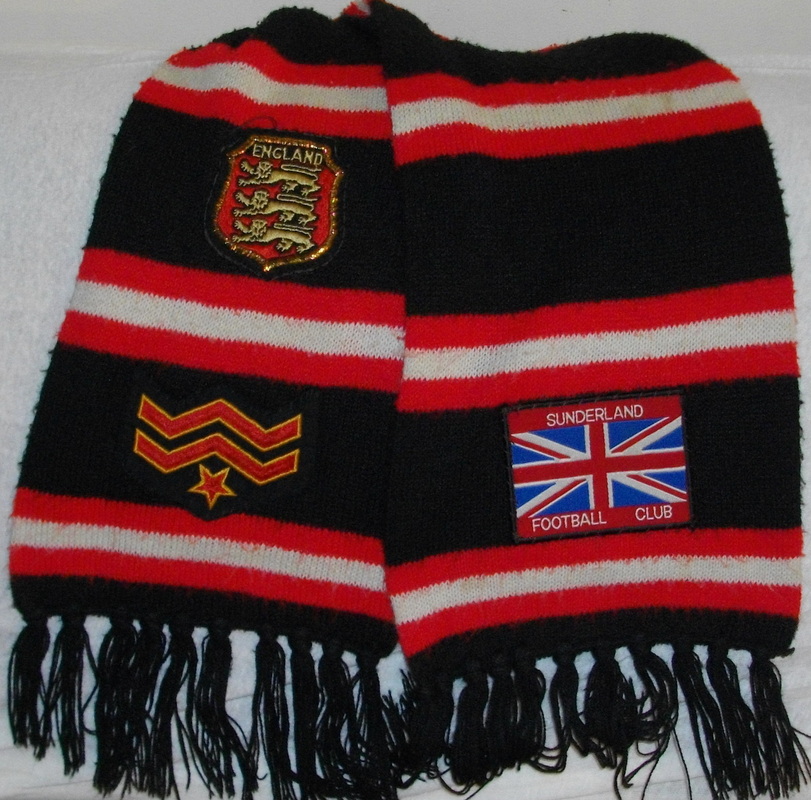
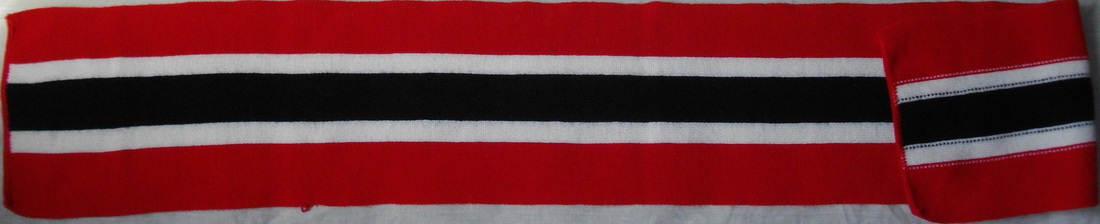
Sunderland Association Football Club scarves.
As Sunderland is the club for which I have the most scarves, I have put them into categories:
Official scarves from the Roker Park era. Sunderland played at Roker park until 1997. The two popular ends of the stadium were called the Roker End and the Fulwell End. Each of these names has appeared on scarves. Various club badges have been used during this era. In 1937 the town crest was worn on the Cup Final shirts. In the 1960s and early 1970s the club badge was a simple shield with three stripes. During the 1972-73 season a new badge was introduced reflecting the shipbuilding industry. However, most of the scarves seen at the 1973 F.A.Cup final display the earlier badge.
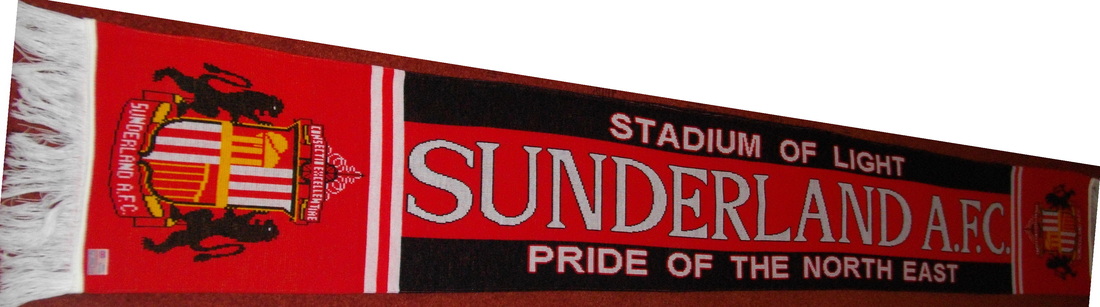
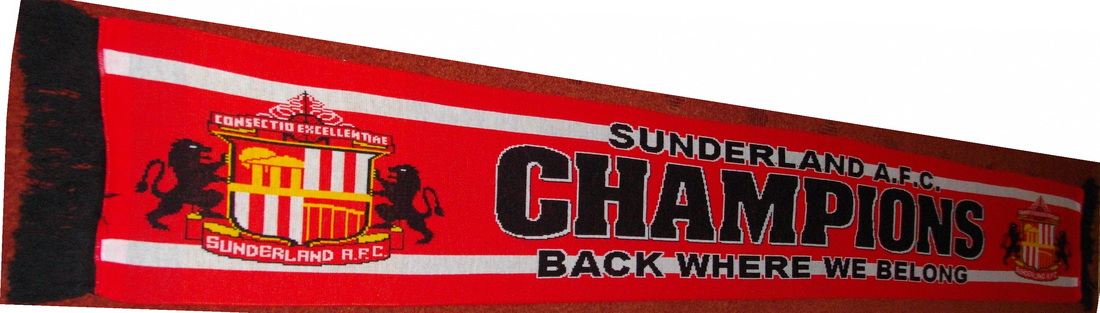
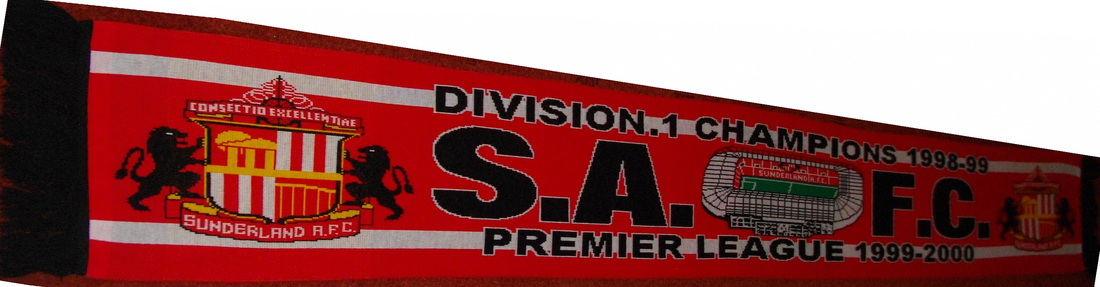
Official scarves from the Stadium of Light era. In 1997 Sunderland moved to their new Stadium of Light. A new badge also appeared. Being built on the site of the closed Wearmouth Colliery, the badge shows a pit-head winding wheel. The stripe design of the shirt is continued with the vertical columns of Penshaw Monument and the supports of the Wearmouth Bridge. Sunderland's nickname of the Black Cats is represented by two black lions.
Unofficial scarves. These scarves, which were not on sale at the club shop, do not have the "A.F.C." or the real badge. Included in this section are two scarves made for the S.A.F.C. Supporters' Association.
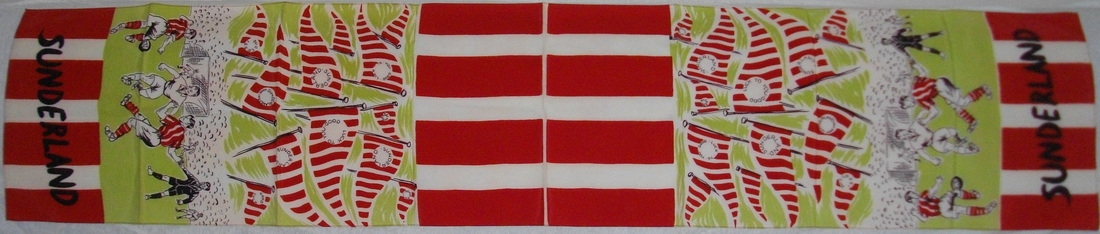
Bar scarves. Despite having no wording, all of the scarves shown were bought as Sunderland scarves. Finally there are two home-made scarves..
Official scarves from the Roker Park era. Sunderland played at Roker park until 1997. The two popular ends of the stadium were called the Roker End and the Fulwell End. Each of these names has appeared on scarves. Various club badges have been used during this era. In 1937 the town crest was worn on the Cup Final shirts. In the 1960s and early 1970s the club badge was a simple shield with three stripes. During the 1972-73 season a new badge was introduced reflecting the shipbuilding industry. However, most of the scarves seen at the 1973 F.A.Cup final display the earlier badge.
Official scarves from the Stadium of Light era. In 1997 Sunderland moved to their new Stadium of Light. A new badge also appeared. Being built on the site of the closed Wearmouth Colliery, the badge shows a pit-head winding wheel. The stripe design of the shirt is continued with the vertical columns of Penshaw Monument and the supports of the Wearmouth Bridge. Sunderland's nickname of the Black Cats is represented by two black lions.
Unofficial scarves. These scarves, which were not on sale at the club shop, do not have the "A.F.C." or the real badge. Included in this section are two scarves made for the S.A.F.C. Supporters' Association.
Bar scarves. Despite having no wording, all of the scarves shown were bought as Sunderland scarves. Finally there are two home-made scarves..
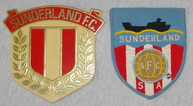
Plastic door plaque and Supporters Association embroidered badge.
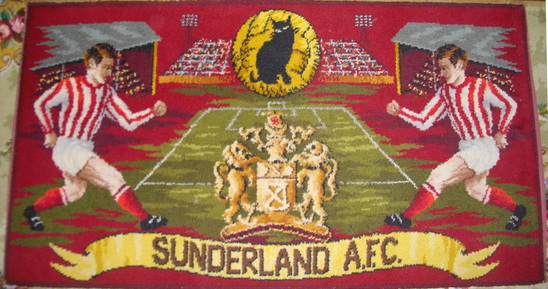
Rug made circa 1969/70.
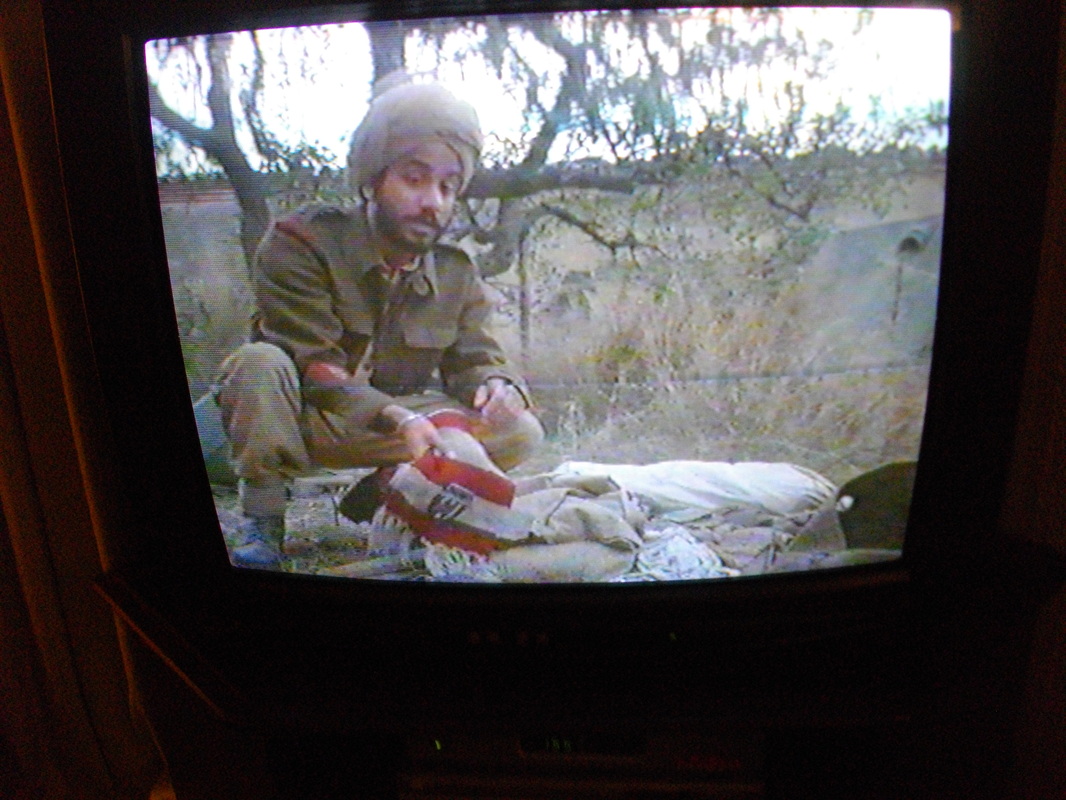
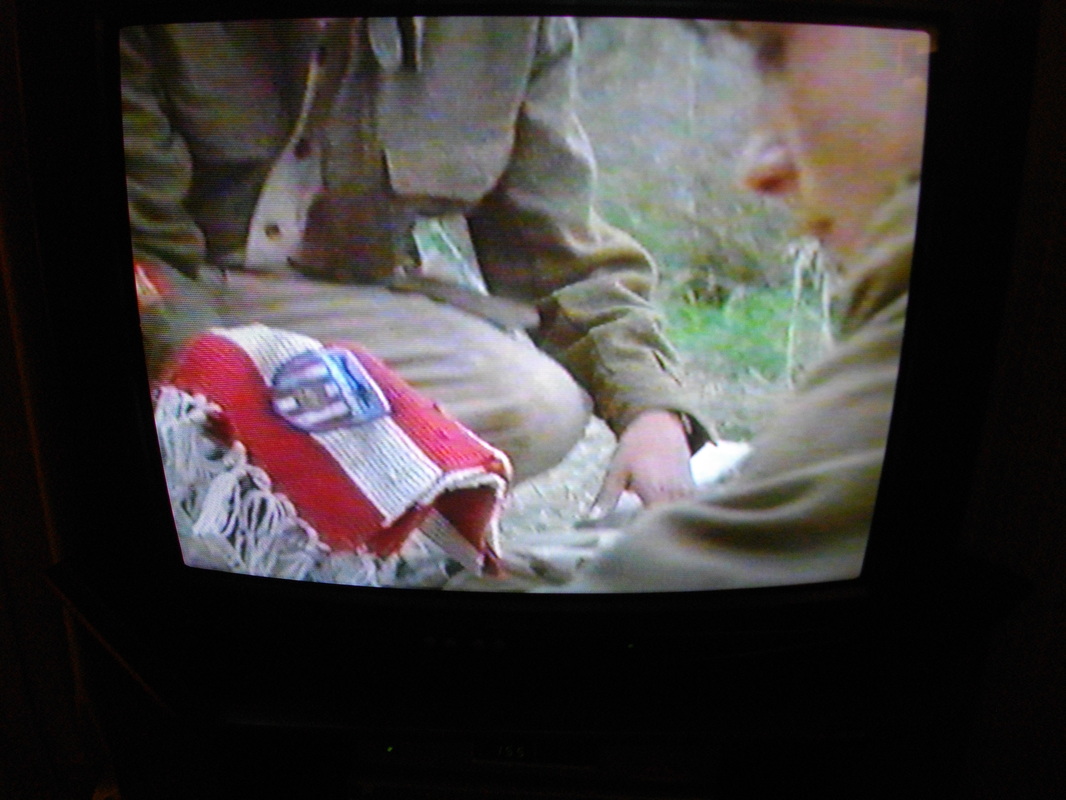
Sunderland scarf in the movies: The English Patient
http://sharetv.org/movies/the_english_patient_1996/trivia
When Kip (Naveen Andrews) is packing his things before he leaves he also packs up the belongings of Hardy (Kevin Whately). Among the belongings is a scarf for Sunderland AFC (a football club based in North East England). In real life the actor Kevin Whately is a committed, life-long supporter of Newcastle United Football Club who share a heated rivalry with Sunderland AFC.
What the above reference does not mention is that although the film is set in 1945 the badge on the scarf did not appear until 1972/3.